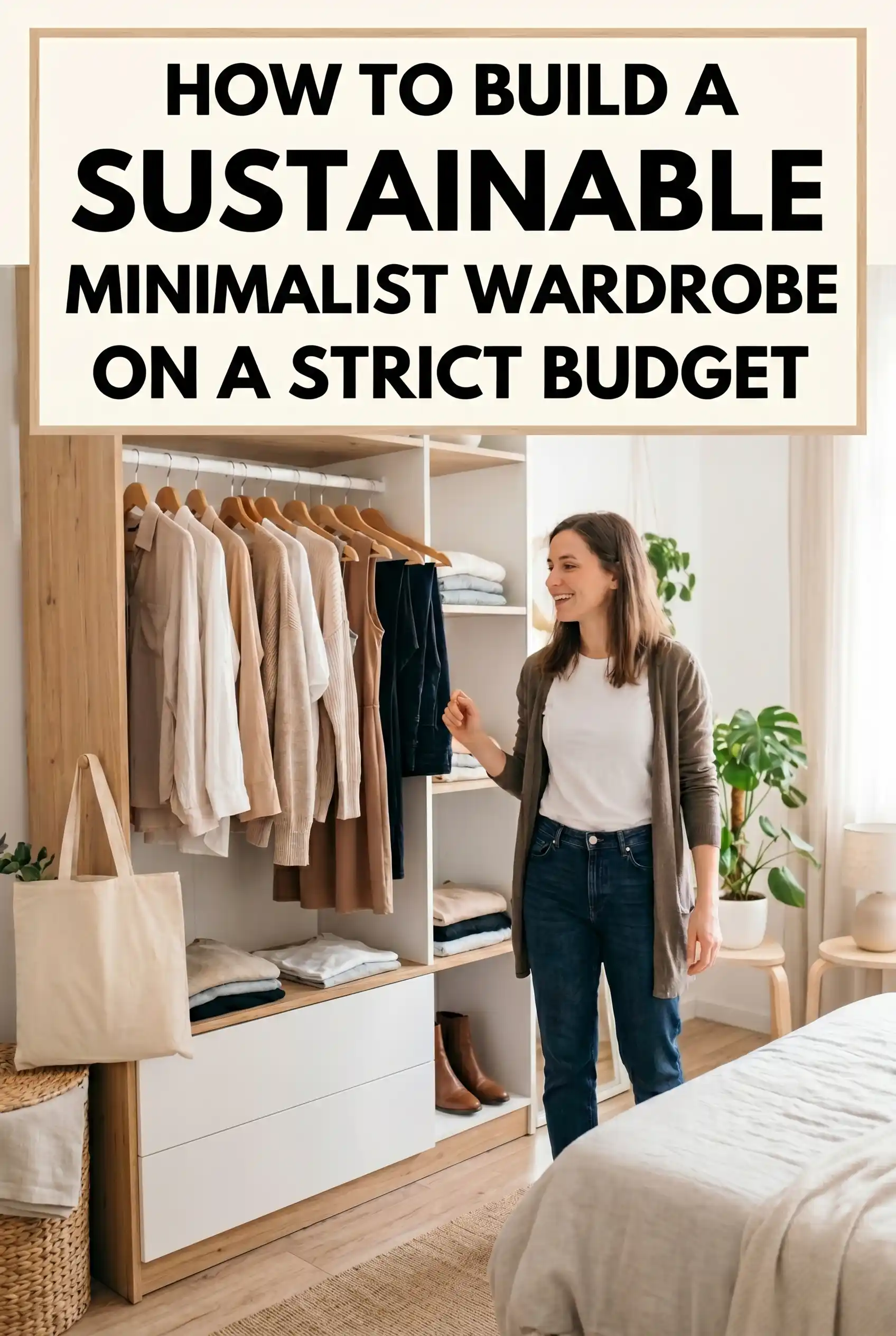
You're standing in front of a closet packed with clothes and you feel like you have absolutely nothing to wear.
I've been there. More times than I can count. I'd stare at a rail crammed with shirts, a drawer stuffed with jeans, a pile of shoes on the floor — and still feel like nothing worked, nothing fit right, nothing felt like me. I'd end up wearing the same five things on rotation while everything else just sat there collecting guilt.
The problem wasn't that I had too few clothes. The problem was that I had too many of the wrong ones.
Here's what I need to address right away: building a minimalist wardrobe does NOT mean buying $150 organic linen tunics or curated $80 basics from a slow fashion brand with a pretty Instagram page. That version of "sustainable fashion" is a luxury — and it gets pushed hard by people who already have money.
Real sustainable fashion on a budget looks completely different. It means shopping secondhand, wearing what you already own more intentionally, taking care of your clothes so they last, and stopping the cycle of buying cheap things you don't actually love.
Nobody should feel shame about buying fast fashion in the past. Most of us did what we could with the money we had. This is about moving forward — making smarter choices that save money and reduce waste at the same time.
Let's build your closet from scratch.
Step 1: The Closet Audit (Do This Before You Buy a Single Thing)
This is the step everyone wants to skip. Don't skip it.
You cannot build a functional minimalist closet on top of chaos. Before anything new comes in, you need to know exactly what you're working with.
How to Do It:
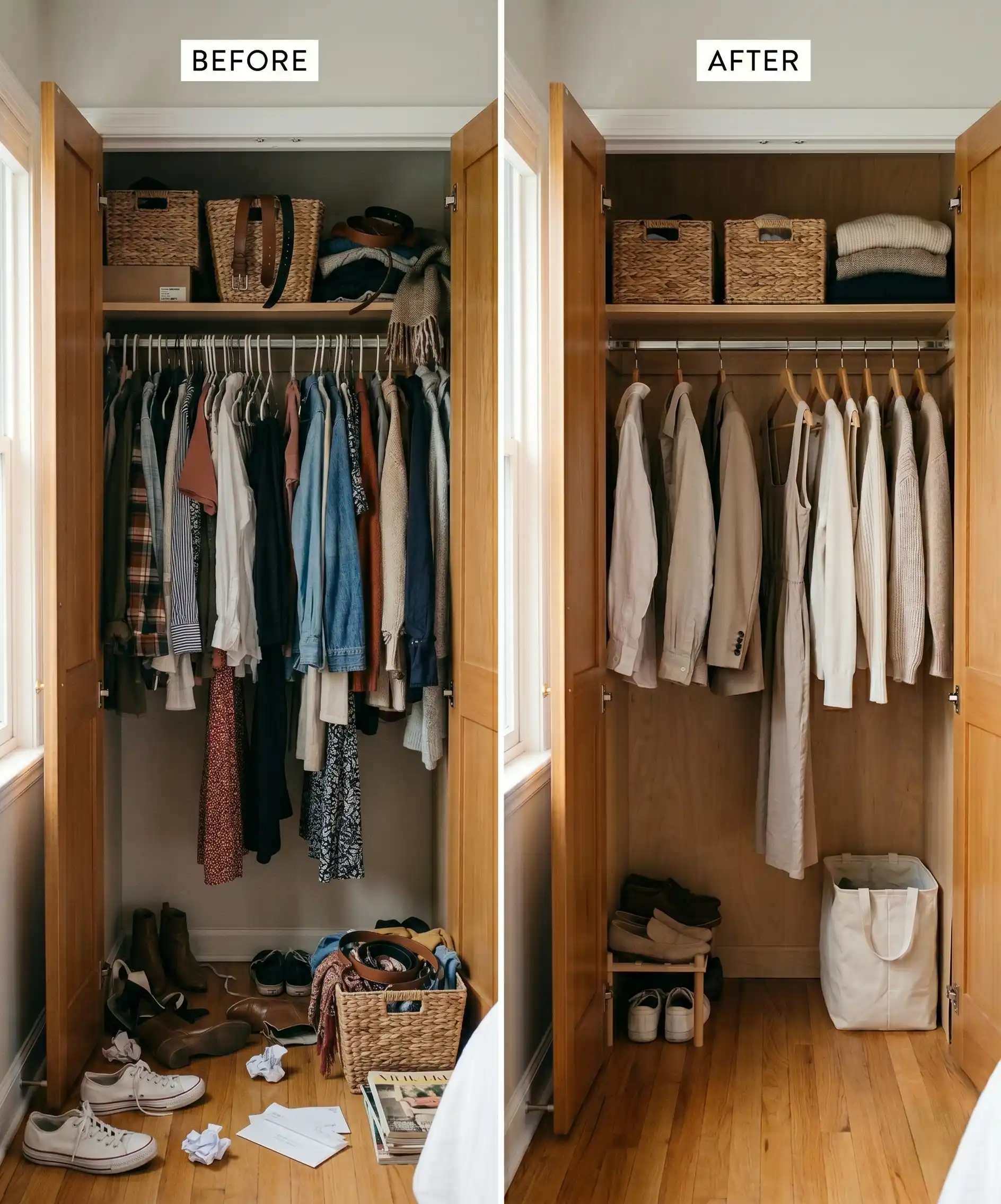
Pull everything out of your closet and drawers. Lay it all on your bed. Yes, all of it.
Now sort each item honestly:
Keep — You wear it regularly, it fits well right now, and you actually feel good in it
Donate — It's in good condition but you never reach for it
Trash — Stained, ripped, stretched out beyond repair, or just done
Alter or repair — Has potential but needs a button sewn or a hem fixed
Be ruthless. That dress you've been holding onto for three years "just in case" — donate it. The jeans that technically fit but make you feel bad every time you wear them — gone. Clothes that don't make you feel good are costing you mental energy every single morning.
After the Audit, Ask Yourself:
What do I actually reach for every single week?
What colors and silhouettes do I consistently choose?
What gaps genuinely exist — meaning, what am I always wishing I had?
Write these answers down. They become your shopping list going forward.
Step 2: Define Your Personal "Uniform"
This sounds restrictive. It's actually the most freeing thing you can do.
A personal uniform is not about wearing the same outfit every day. It's about understanding your style pattern — the combination of shapes, colors, and pieces that show up in your closet over and over because they actually work for your life.
How to Find Yours:
Look at the "Keep" pile from your audit. What do those pieces have in common?
Maybe you always reach for dark jeans, simple tops, and sneakers. Maybe it's flowy skirts, plain tanks, and sandals. Maybe it's joggers and oversized hoodies because you work from home and comfort is non-negotiable.
That pattern is your uniform. It tells you exactly what to look for when you shop and — just as importantly — what to walk away from.
When you know your uniform, you stop buying things that are "cute in the store" but never actually get worn. Every purchase becomes intentional.
Step 3: The Minimalist Base — What to Actually Own
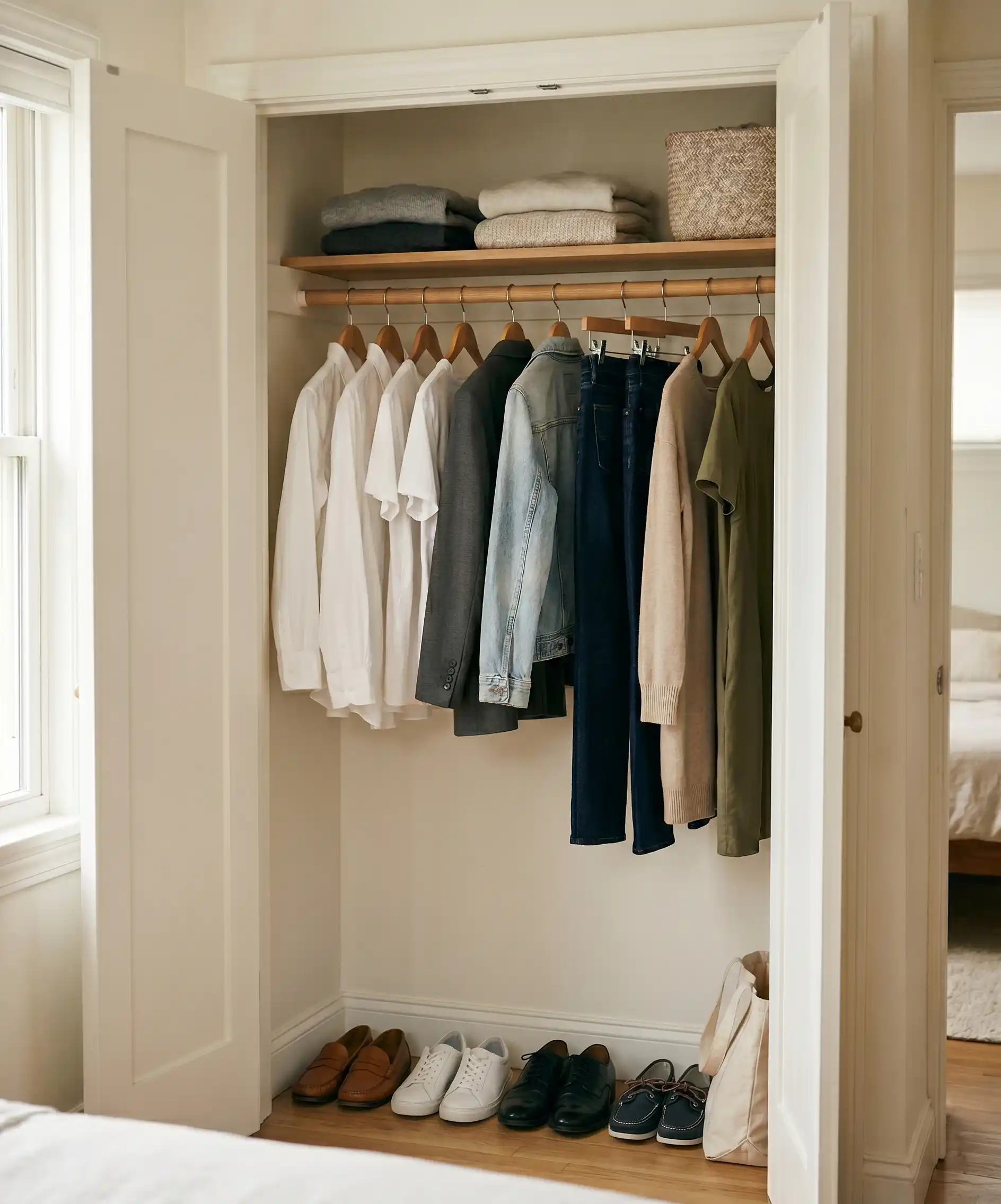
Every functional minimalist closet is built on a core set of versatile basics. These are the pieces that mix and match with everything, work in multiple situations, and get worn constantly.
The Foundation Pieces to Aim For:
Bottoms (2–3 to start):
One pair of dark wash straight-leg or slim jeans — the most versatile bottom you can own
One pair of casual pants or joggers for home and errands
One neutral-colored skirt or dress (optional, based on your lifestyle)
Tops (5–7):
2–3 plain crew neck or V-neck tees in white, black, or gray
1–2 long-sleeve shirts in a neutral color
1 slightly nicer top for occasions that need it
Layers (2):
One cozy oversized sweater or cardigan
One jacket or coat that works for most weather
Shoes (3):
One everyday sneaker
One casual flat, sandal, or loafer
One weather-appropriate option (boots in winter, slides in summer)
Important note: You do NOT have to acquire all of these at once. Start with what you already have from your audit. Add pieces slowly, only when you have a genuine gap.
Step 4: The Art of Strategic Thrift Shopping
This is where the real budget magic happens.
Thrift stores are genuinely one of the best tools a frugal minimalist has. But there's a difference between shopping intentionally and wandering in to buy whatever seems like a deal.
My Rules for Thrift Shopping:
Go in with a list. Your audit gave you your gaps. Write them down before you walk through the door. If "gray crewneck sweater" is on your list, that's what you're looking for — not the sequin top that catches your eye across the store.
Check the fabric. Fast fashion falls apart fast, even secondhand. Feel the weight of the fabric. Look at the seams. Check the label — natural fibers like cotton, wool, and linen hold up far better than polyester blends and last years longer.
Ignore the brand. A $4 no-name tee at the thrift store in perfect condition is just as good as a $4 branded tee. What matters is quality and fit, not the tag.
Check for damage honestly. Pilling, fading, stretched-out necklines — if you see it in the store, it won't fix itself at home. Only bring home pieces you'd wear exactly as they are right now.
Hit the right days. Most thrift stores restock on specific days and run color-tag sales regularly. Ask your local store what their schedule looks like and plan your visits around it. Goodwill, Salvation Army, and local church thrift stores all run weekly deals.
Step 5: Clothing Care — Make Cheap Things Last
This step is wildly underrated in every frugal fashion conversation I've ever seen.
The most sustainable thing you can do with an inexpensive piece of clothing is make it last three times as long as it was designed to. Proper clothing care costs nothing, and it is the difference between a $10 thrifted cotton tee lasting two years versus six.
The Habits That Actually Matter:
Wash less. Most clothes — jeans especially — don't need washing after every single wear. Spot clean when you can. Air out after wearing. Over-washing breaks down fabric faster than almost anything else.
Wash cold. Hot water shrinks fabric, fades colors, and degrades elastic. Cold water is almost always sufficient and extends the life of everything in your closet.
Turn dark items inside out. Dark denim and black clothing hold their color dramatically longer when washed inside out. Two seconds of effort, real difference over time.
Air dry whenever possible. The dryer is rough on fabric fibers, elastic, and stitching. Hang dry anything you care about. Your clothes will last noticeably longer.
Fix things early. A loose button repaired today costs nothing. A button lost and never replaced leads to a shirt that gets donated. Learn three basic hand-sewing stitches — it takes 20 minutes to learn and saves money for years.
Step 6: The One-In, One-Out Rule
Once your minimalist closet is built, this single rule keeps it that way.
Every time a new piece comes in, an old one goes out. One in, one out. No exceptions.
This keeps your closet from filling back up with clutter. More importantly, it forces you to ask a real question before every purchase: "Is this good enough to replace something I already own?" That question alone stops a huge number of impulse buys before they happen.
What Does This Actually Cost?
Let me give you a realistic picture of what building this closet secondhand can look like:
Thrift store jeans in great condition: $6–$12
Basic tees (2–3 pieces): $2–$4 each
A quality secondhand sweater or cardigan: $5–$10
A secondhand jacket or blazer: $8–$18
Shoes from a thrift store or discount retailer: $10–$25
A functional minimalist base built entirely secondhand can realistically come together for $60–$100 total — spread across a few shopping trips as you find the right pieces.
Compare that to buying everything new, even from budget fast fashion retailers, and you're looking at three to four times that amount for lower quality and shorter lifespan.
You Don't Need More Clothes — You Need the Right Ones
Here's the honest truth that changed how I think about my closet completely: I used to spend more money buying things I didn't love than I've ever spent building a closet I actually do.
A hundred dollars of intentional, strategic thrift shopping builds a better, more functional, more versatile closet than three hundred dollars of impulse fast fashion hauls. Every single time.
You don't need a big budget to get dressed well. You need clarity on what you actually wear, patience at the thrift store, and the discipline to stop buying things that don't fit the real life you're living right now.
Start with the closet audit this weekend. That one step alone will show you more than anything else I've said here.
Now I want to hear from you — have you ever tried building a capsule closet, or is this something you're just starting to think about? And what's the best piece you've ever scored at a thrift store? Drop it in the comments — I genuinely love hearing thrift finds, and your story might be exactly the push someone else needs to finally walk into their local Goodwill with a plan.
Found this helpful? Pin it to your Pinterest board for when you're ready to tackle your closet — and share it with a friend who always says she has nothing to wear.

Reader Interactions