I used to do this thing at the end of every month where I'd open my banking app, stare at my balance, and try to reverse-engineer where everything went.
I wasn't buying anything dramatic. No big splurges, no fancy vacations, no impulse purchases I could point to and say that's the problem. It was smaller than that. Messier than that. It was a $6 coffee here, a $14.99 subscription there, a bag of pre-cut broccoli instead of a whole head, a name-brand cleaner when the generic would have done the exact same job.
Death by a thousand cuts. That's what it was. Tiny, invisible spending that felt completely normal in the moment and completely inexplicable on the bank statement.
The shift that changed everything wasn't a budget overhaul or a spreadsheet system. It was asking one honest question about every regular purchase: Does this actually make my life better, or have I just been buying it out of habit?
For 20 things on this list, the honest answer was: habit. Pure habit — wrapped in the feeling of convenience, comfort, or normalcy. Cutting them didn't feel like deprivation once I did it. It felt like I'd quietly stopped funding things I didn't actually care about.
Here are all 20, with exactly what I replaced them with and what the math looks like in real money.
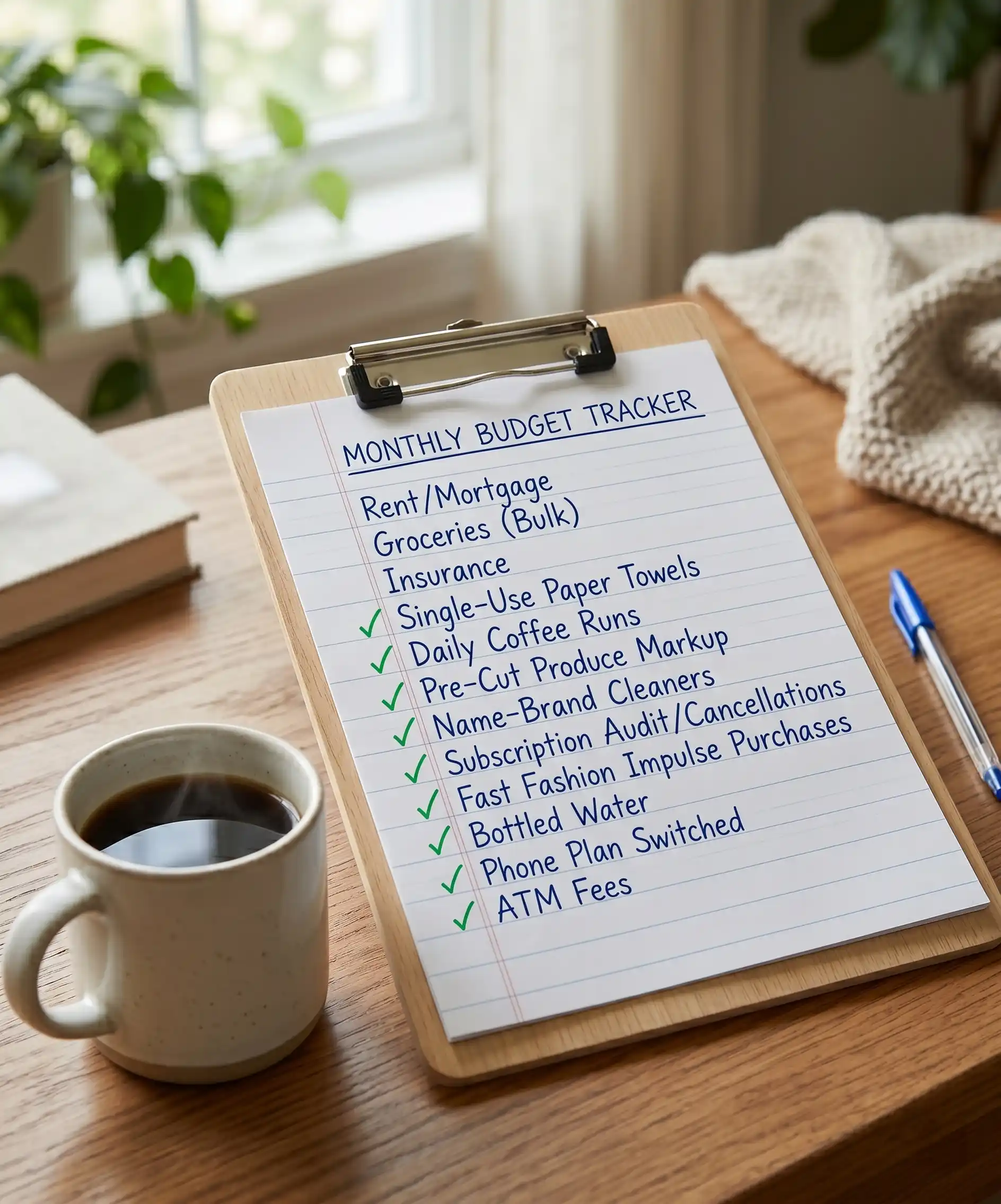
1. Single-Use Paper Towels
I used to go through a roll of paper towels every week without thinking twice. At roughly $3.50 a roll, that's over $180 a year I was literally throwing in the trash after one use.
I replaced them with a stack of cheap washcloths and cut-up old t-shirts. They live in a small basket under the sink and go in the washing machine with regular laundry. I haven't bought a roll of paper towels in over a year and I genuinely don't miss them.
Estimated Annual Savings: $180
2. Daily Coffee Shop Runs
This is the one everyone rolls their eyes at — until they actually do the math. At $6 per visit, five days a week, fifty-two weeks a year, that's $1,560 a year on coffee. I was spending roughly half that, but it was still nearly $780 walking out the door for a cup I could have made at home.
I bought a decent French press for $18 and a bag of good whole bean coffee for $10 a month. My morning coffee is actually better now. The only thing I lost was the habit of paying a premium for it.
Estimated Annual Savings: $780
3. Pre-Cut and Pre-Washed Produce
I completely understood why I bought pre-cut butternut squash, pre-washed salad bags, and spiralized zucchini. It felt like a time-saver. Then I actually calculated the markup — pre-cut produce runs 40 to 70% more than the whole version of the same vegetable.
A whole butternut squash costs about $1.50. The pre-cubed version costs $4.50 for roughly the same amount. I started buying whole produce and spending five extra minutes with a knife. The savings add up to over $200 a year based on my family's grocery patterns.
Estimated Annual Savings: $200
4. Name-Brand Cleaning Supplies
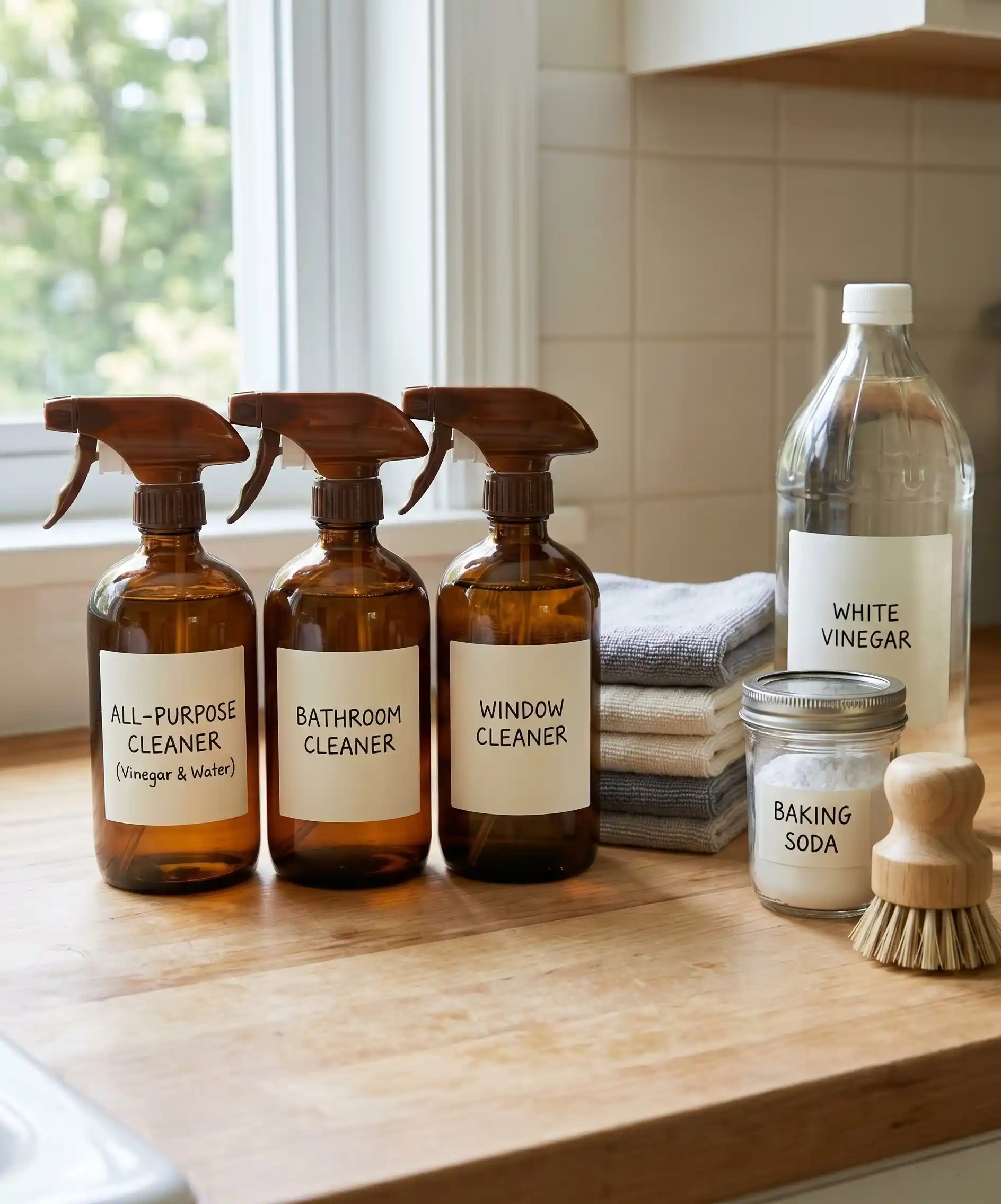
For a long time I bought the same branded cleaners out of sheer familiarity — the blue bottle, the orange bottle, the name I'd seen on commercials my whole life. Then I actually compared labels and discovered that store-brand and generic versions contain the same active ingredients at a fraction of the price.
Switching to store-brand cleaners at Walmart and Aldi, plus making my own all-purpose spray with white vinegar and water, cut my cleaning supply spend by about $200 a year. The surfaces are equally clean. I just stopped paying for brand recognition.
Estimated Annual Savings: $200
5. Unused Subscription Services
I did an audit of every recurring charge hitting my bank account and found five subscriptions I had completely stopped using. A meditation app I opened three times. A streaming service I'd signed up for one show. A subscription box that felt exciting the first month and annoying by the fourth. A cloud storage upgrade I didn't need.
Canceling everything I didn't actively use at least once a week freed up $450 a year. If you haven't done a subscription audit in the last six months, I strongly suggest opening your bank statement and going line by line. You will almost certainly find something surprising.
Estimated Annual Savings: $450
6. Fast Fashion Impulse Buys
This one took the most honesty to face. I wasn't buying designer clothing — I was buying cheap things from stores that made $15 feel inconsequential. But a $15 top every other week, a $25 pair of pants here, a $20 dress that seemed like a great deal — it added up to roughly $500 a year on clothing I wore a handful of times before it fell apart or I lost interest.
I stopped buying new entirely and switched to intentional thrift shopping. I spend less, own less, and wear what I have far more. The impulsive "treat yourself" spending is the part I don't miss.
Estimated Annual Savings: $500
7. Bottled Water
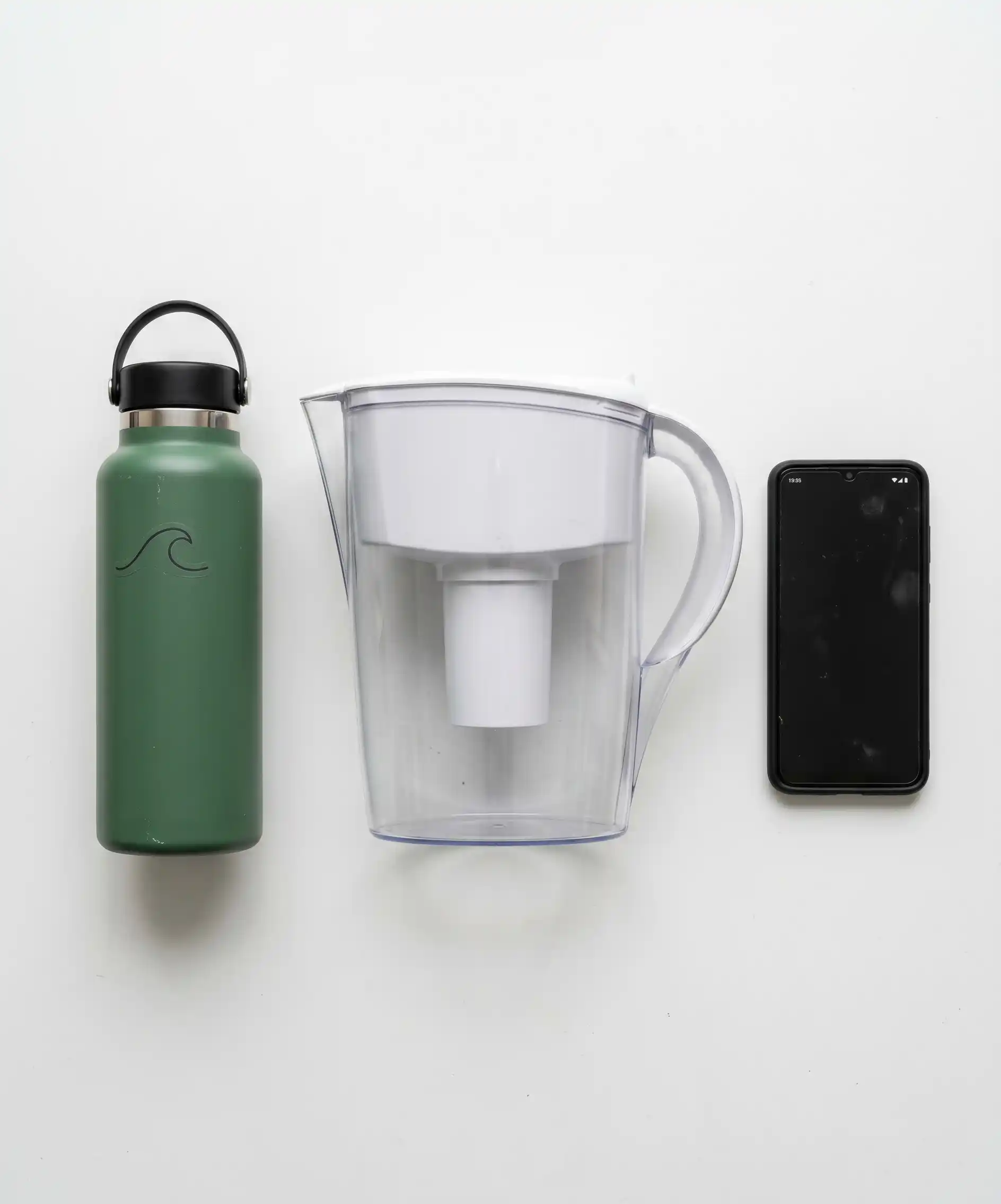
We were buying a case of bottled water every week. At roughly $4 a case, that's $200 a year — for something that comes out of the tap for fractions of a cent per gallon.
A countertop water filter pitcher was $25 upfront and the replacement filters cost about $20 a year. That's it. The water tastes just as good, there are no plastic bottles to deal with, and the annual cost difference is stark.
Estimated Annual Savings: $200
8. An Overpriced Cell Phone Plan
I was paying $85 a month for a major carrier plan I'd been on for years without ever questioning it. I switched to Mint Mobile — same coverage area, same data speed — for $20 a month.
That's $65 a month back in my budget, which is $780 a year. I made one phone call and transferred my number. It took 30 minutes and was one of the highest-dollar-per-hour decisions I've made for my budget. If you haven't shopped your phone plan recently, this is the one I'd look at first.
Estimated Annual Savings: $500
9. Dryer Sheets and Fabric Softener
Dryer sheets are genuinely one of the most effective marketing inventions of the last century. They're a product invented to solve a problem — static and stiffness — that was itself created by modern washing and drying habits. They cost roughly $5 a box and most households go through several boxes a year.
I switched to wool dryer balls — a one-time purchase of $12 for a set of six that will last years. They reduce static, soften clothes, and cut drying time slightly. I add a few drops of essential oil if I want a scent. I haven't bought dryer sheets since.
Estimated Annual Savings: $60
10. Single-Use Plastic Bags
I was buying Ziploc bags constantly — sandwich bags for lunches, gallon bags for freezer storage, snack bags for the kids. A box here, a box there, it added up to about $50 a year without me ever noticing.
I switched to reusable silicone bags for the things I was using most. They wash easily, last for years, and cost about $15 upfront for a set that replaced most of what I was buying. For freezer storage I now use glass containers and Mason jars.
Estimated Annual Savings: $50
11. Name-Brand Over-the-Counter Medications
Tylenol, Advil, Zyrtec, Benadryl — I bought name brands because they were the familiar ones. Then a pharmacist told me something that changed my habits immediately: generic OTC medications are FDA-required to have the same active ingredient, same dosage, and same effectiveness as their name-brand counterparts.
Acetaminophen is acetaminophen whether it says Tylenol or store brand on the bottle. Switching to generics for every OTC medication my family uses regularly saved about $120 a year. The pharmacist confirmed I wasn't compromising on anything.
Estimated Annual Savings: $120
12. Food Delivery App Fees and Tips
I'm not saying I never order delivery now. But I tracked what I was spending on delivery apps for one month and was genuinely shocked. It wasn't just the food — it was the delivery fee, the service fee, the tip, and the slight markup on the food itself compared to just going to the restaurant. A $14 meal regularly became a $26 transaction.
I started picking up food directly when I wanted takeout and cooking the remaining nights. Cutting my delivery orders from two or three times a week to twice a month saved about $350 a year.
Estimated Annual Savings: $350

13. A Gym Membership I Barely Used
I paid $25 a month for a gym membership for two years. I went consistently for about four months, sporadically for another two, and then stopped going almost entirely while continuing to pay. That's $300 a year for a building I drove past.
I cancelled and replaced it with walking, free YouTube workout channels (there are genuinely excellent ones), and a $30 set of resistance bands. My fitness routine is actually more consistent now because removing the commute removed the biggest friction point.
Estimated Annual Savings: $300
14. Premium Cable or Satellite TV
Our cable bill had crept up to $110 a month over several years of "just keeping it" out of inertia. We cut the cord completely, kept Netflix and one other streaming service, and bought a $25 antenna for local channels.
That's $30 a month now versus $110 — a savings of $960 a year. We watch everything we actually want to watch. The only thing we lost was 200 channels we never turned on.
Estimated Annual Savings: $360
15. Pre-Made Seasoning Packets and Sauce Mixes
Taco seasoning packets at $1.50 each. Ranch dip mix packets. Gravy mixes. Fajita seasoning. These seem cheap individually, but I was buying them constantly — two or three a week — and not thinking about it.
I learned the base spice blends for the seasonings I use most (taco seasoning is literally cumin, chili powder, garlic powder, and paprika) and now mix my own from bulk spices. A batch takes 60 seconds and costs pennies compared to a packet. The flavor is better and I spend about $80 less per year on what amounts to pre-measured spices.
Estimated Annual Savings: $80
16. Extended Warranties on Electronics and Appliances
I said yes to extended warranties at checkout for years because they felt responsible. A few hundred dollars of protection for a $400 appliance seemed reasonable. But when I actually thought back, I had never once used an extended warranty. Not once.
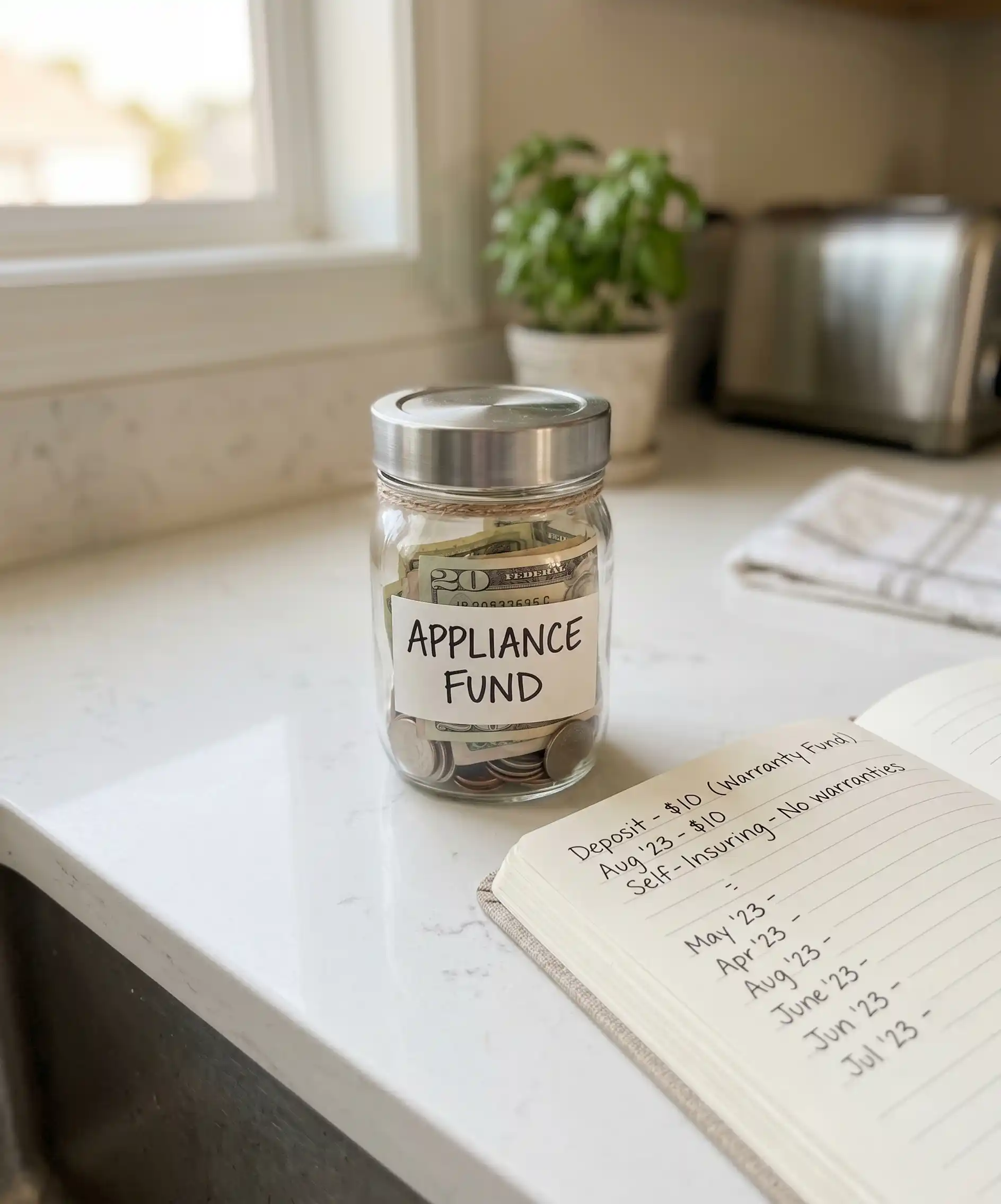
Consumer data shows that most appliances and electronics either fail quickly (covered by the manufacturer's warranty) or last well beyond the extended warranty period. The extended warranty is almost always profit for the retailer. I stopped buying them entirely and put that $120 a year into a small "appliance fund" instead.
Estimated Annual Savings: $120
17. ATM Fees
I was paying ATM fees two or three times a month because I'd use whatever machine was convenient rather than planning ahead. At $3–$4 per transaction, that was $80–$120 a year in fees for the privilege of accessing my own money.
I switched to a bank account with no ATM fees (Chime and Ally both reimburse ATM fees), started using cash back at grocery checkouts instead of standalone ATMs, and planned ahead slightly better. The fees dropped to essentially zero.
Estimated Annual Savings: $80
18. Convenience Store Snack and Drink Runs
This was one of my sneakiest spending leaks. A gas station coffee in the morning. A bag of chips in the afternoon. A sports drink on a busy day when I hadn't planned ahead. Each purchase was $2–$5 and completely forgettable — which is why I was spending about $200 a year on them without realizing it.
I started keeping snacks in my bag and a reusable water bottle in my car. A $10 bag of trail mix from Costco lasts me two weeks. The convenience store runs dropped to almost never.
Estimated Annual Savings: $200
19. New Books and Magazines
I love books. I was also spending $120 a year on new books, a magazine subscription I read once a month at most, and occasional impulse buys from the Target book section.
My library card fixed all of this for free. New releases, bestsellers, audiobooks through Libby, digital magazines through Hoopla — all of it costs nothing. I actually read more now because I'm not picky about which books to commit to financially.
Estimated Annual Savings: $120
20. Professional Car Washes
I was getting my car washed at an automatic car wash about twice a month — usually the $12–$15 mid-tier option. That's roughly $300 a year on something I can do myself for almost nothing.
Now I wash my car at home with a $6 bottle of car soap and a bucket. I do it less frequently, which is also fine — cars don't actually need washing twice a month in most climates. A $150 annual savings for 20 minutes of occasional effort is a trade I'll take every time.
Estimated Annual Savings: $150
The Grand Total
Let's add it all up:
# | Item Cut | Annual Savings |
|---|---|---|
1 | Paper Towels | $180 |
2 | Coffee Shop Runs | $780 |
3 | Pre-Cut Produce | $200 |
4 | Name-Brand Cleaners | $200 |
5 | Unused Subscriptions | $450 |
6 | Fast Fashion Impulse Buys | $500 |
7 | Bottled Water | $200 |
8 | Overpriced Phone Plan | $500 |
9 | Dryer Sheets | $60 |
10 | Plastic Bags | $50 |
11 | Name-Brand OTC Medications | $120 |
12 | Delivery App Fees | $350 |
13 | Unused Gym Membership | $300 |
14 | Premium Cable TV | $360 |
15 | Seasoning Packets | $80 |
16 | Extended Warranties | $120 |
17 | ATM Fees | $80 |
18 | Convenience Store Runs | $200 |
19 | New Books and Magazines | $120 |
20 | Professional Car Washes | $150 |
TOTAL | $5,000 |
Small Cuts. Massive Compounding.
None of these changes were painful. That's the part that still surprises me when I think about it.
No single item on this list required a dramatic lifestyle sacrifice. I still drink great coffee. I still eat well. I still watch the shows I want to watch. I still read. I just stopped funding the overhead costs of those things — the brand premiums, the convenience markups, the habits I'd never examined.
The real lesson isn't that any one of these cuts is life-changing. It's that twenty small cuts, made consistently, add up to five thousand dollars a year that now goes toward things that actually matter to me — paying down debt, building savings, and eventually having real financial security.
You don't need to do all twenty at once. Pick three this month. See what happens.
Now I want to hear from you — which one item from this list are you going to stop buying this week? Is it the overpriced phone plan, the delivery apps, the bottled water? Drop it in the comments. And if there's something you stopped buying that saved you real money and it's not on this list, I want to know — your ideas might inspire the next version of this post.
Found this helpful? Save it to your Frugal Living or Budgeting board on Pinterest — and share it with a friend who's been wondering where their money keeps going.

Reader Interactions