
You know that specific panic when someone texts "Hey, I'm in your neighborhood — mind if I stop by in 20 minutes?"
My heart used to sink every single time. Because my house wasn't a disaster in a dramatic way — it was a disaster in the slow, creeping, everyday way that somehow feels worse. Dishes from last night still in the sink. Laundry piled on the bedroom chair. Mail spread across the kitchen counter. A floor that desperately needed vacuuming but wasn't going to get it in the next 20 minutes.
I'd spend the entire visit feeling distracted and vaguely ashamed instead of actually enjoying seeing my friend.
The solution I kept defaulting to was the "Saturday marathon clean." Spend half the weekend catching up on everything the week had accumulated. Scrubbing, vacuuming, wiping down, doing five loads of laundry — all while the clock ticked away the only free time I had. It was exhausting and demoralizing, and somehow the house felt messy again by Tuesday.
Then I started paying close attention to people whose homes always seemed clean — not sterile-magazine clean, but genuinely livable, consistently tidy. What I noticed changed everything.
They weren't cleaning more than me. They were doing tiny things consistently that I wasn't doing at all.
These seven habits aren't for neat freaks or people with cleaning obsessions. They're lazy-genius strategies for busy people who are tired of the cycle and just want to actually relax in their own home.
Habit 1: Make the Bed Within 5 Minutes of Getting Out of It
This one has been studied, written about, and recommended by everyone from Navy admirals to productivity researchers — and there's a reason it keeps coming up.
Making your bed every morning takes two to five minutes. That's it. And it does something disproportionate to how your entire bedroom looks and feels.
A made bed makes the whole room look 70% cleaner, even if nothing else is touched. It sets a visual tone for the rest of the morning. And psychologically, it's a tiny completed task right at the start of the day — a small signal to your brain that today is a day where things get done.
The time breakdown:
Pulling up a duvet and straightening two pillows: ~2 minutes
Fully making a bed with tucked sheets and decorative pillows: ~5 minutes
The impact on how your room looks: enormous
The reason most people skip it: it feels pointless when you're just going to get back in it that night. But you're in and out of your bedroom multiple times a day, and a messy bed drags the energy of the entire room down every single time you see it. Two minutes. Make it anyway.
Habit 2: Never Leave a Room Empty-Handed
This is the single habit that has made the most consistent difference in my home. It costs zero extra time and it's almost embarrassingly simple.
Every time you get up to go somewhere else in the house — to get water, to use the bathroom, to grab your phone charger — you pick up one thing that doesn't belong in the room you're leaving and bring it with you.
A glass that needs to go to the kitchen. A jacket that belongs in the hallway closet. A toy that lives in the playroom. One thing. Every time you move.
Why it works: Clutter in most homes doesn't accumulate in big dramatic events. It accumulates one abandoned item at a time. A cup left on the nightstand. A shoe kicked off by the couch. An empty snack wrapper left on the coffee table. "Never leave a room empty-handed" reverses that drift in real time instead of letting it pile up until cleaning day.
Time per trip: 5–10 seconds
Items returned to their home per day: 15–25
Impact on end-of-week cleaning: Dramatic — surfaces stay clear almost automatically
Build this into every member of your household and it multiplies. When I got my family doing this consistently, our living room stopped being the room that needed the most daily attention and became the room that basically kept itself.

Habit 3: Do a 15-Minute Evening Sweep Every Night
People with consistently clean homes don't deep-clean every day. But almost all of them do some version of a short, focused reset before bed. A final pass through the house that takes the day's accumulation and puts it away before everyone wakes up to it again tomorrow.
My version takes about 15 minutes and covers the whole house. I put on a podcast or a good playlist and I just move.
My 15-minute sweep routine:
Kitchen (5–6 min): Wipe down the counters, put away anything left out, make sure the dishwasher is loaded and running
Living room (3–4 min): Cushions back in place, throw blanket folded, any cups or plates brought to the kitchen, remote controls where they belong
Entryway and hallway (2 min): Shoes put away, bags hung up, any coats put where they go
Quick bathroom check (1–2 min): Wipe the sink, straighten the hand towel, make sure the toilet lid is down
That's the whole thing. Fifteen minutes and the house looks like functional adults live in it.
The reason this habit is transformative: you wake up to a clean house instead of yesterday's mess. Waking up to clutter is demoralizing in a way that compounds through the day. Waking up to a reset space sets a completely different tone from the first moment you come downstairs.
Habit 4: Wipe Down the Kitchen After Every Single Meal
Not a deep clean. A wipe.
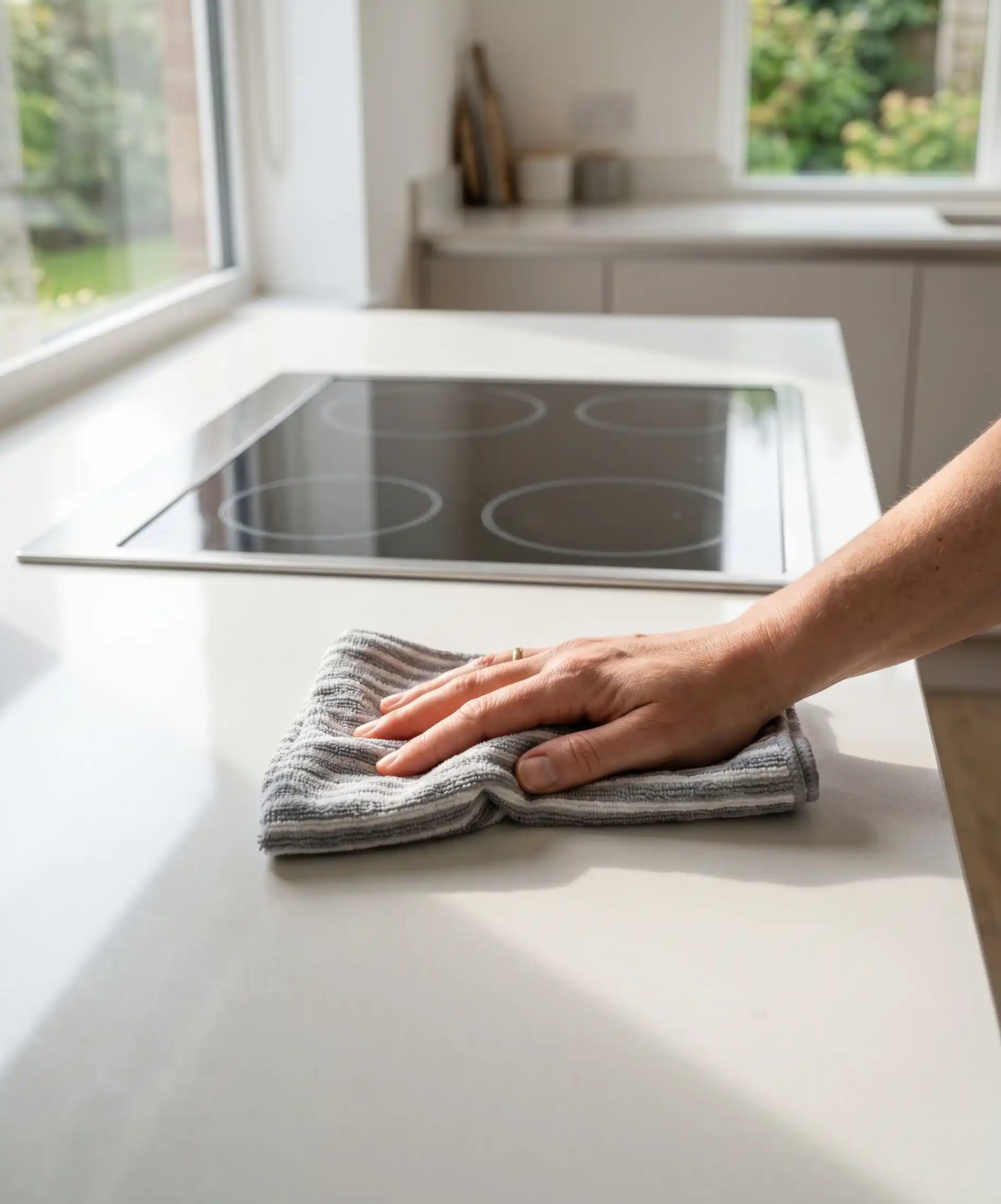
After every meal — dinner especially — take two minutes to wipe down the stovetop, counters, and any surfaces that were used. Put away condiments and anything left out. Rinse the dishes into the dishwasher rather than stacking them in the sink.
The time breakdown:
Wiping stovetop and counters after dinner: ~2 minutes
Loading dishes into dishwasher instead of leaving them in the sink: ~2 minutes
The difference this makes to how your kitchen looks and smells: completely disproportionate to 4 minutes
Here's why this one matters beyond just looks: food residue on stovetops and counters hardens and stains. A fresh spill takes 30 seconds to wipe. A day-old dried spill takes scrubbing. Wiping immediately isn't just aesthetically better — it's less actual work over time.
The kitchen is the room that most affects how the entire home feels. When the kitchen is clean, the whole house feels more under control, even if other rooms are less than perfect.
Habit 5: Handle Laundry Continuously, Not in Crisis Mode
Laundry is the household chore that most often turns into a crisis because most people treat it as a weekend event rather than a daily trickle.
The approach that actually keeps laundry from overtaking your bedroom chair, your bathroom floor, and your Sunday: one load, start to finish, every day or every other day. Start it in the morning. Switch it to the dryer mid-day or when you get home. Fold and put it away the same evening.
That's the whole habit. One load, completely finished.
Why "start to finish" matters: Most laundry chaos doesn't come from washing clothes. It comes from clean clothes that never get folded and put away. A pile of clean laundry on the chair is just as visually disruptive as a pile of dirty laundry — and it tends to be the pile where everything gets wrinkled and "re-dirted" by being pulled in and out of.
One load start to finish: 20 minutes of actual handling, 0 minutes of stress
Laundry left to pile up until the weekend: 3–4 hours plus the whole day feeling chaotic
If you have a family, assign everyone their own laundry day and make "put it away the same day it's dried" the non-negotiable house rule.
Habit 6: Wipe the Bathroom Sink Every Single Morning
This one sounds too small to be worth mentioning. I thought so too, until I started doing it and couldn't believe the difference.
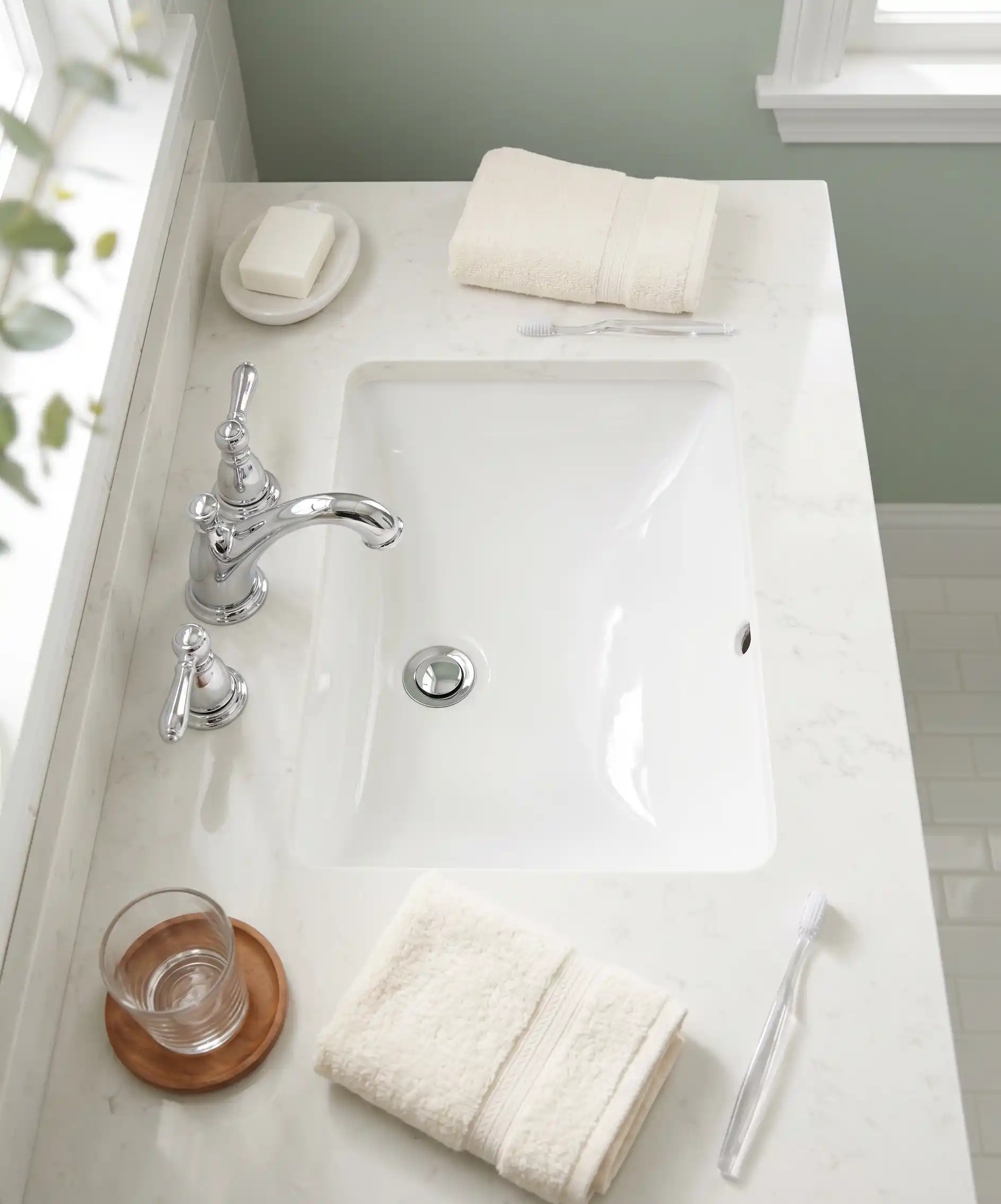
After brushing your teeth in the morning, take the hand towel or a dry cloth and give the sink and faucet handles a 30-second wipe. That's the entire habit.
What this prevents:
The white toothpaste residue that builds up and looks terrible
Water spots on faucet handles that oxidize and become much harder to clean later
That general "the bathroom hasn't been cleaned" look that comes from a grimy sink even when everything else is fine
A bathroom with a clean sink looks significantly cleaner than a bathroom where everything else is fine but the sink is speckled with toothpaste. The sink is the first thing anyone looks at. Keep it clean and the whole room reads as clean.
Time required: 30 seconds
How often: Every morning after brushing
Deep cleaning required because of this habit: Far less frequently
Habit 7: Assign Everything a Home and Put It There Immediately
The root cause of most household clutter isn't laziness. It's that certain things in your home don't have a designated place — so they land wherever is convenient, and they stay there.
The keys that get left on the counter because there's no hook. The mail that piles up because there's no inbox or recycling spot near the door. The bag that gets dropped wherever because there's no assigned spot in the entryway. The kids' shoes that go everywhere because no one established exactly where they're supposed to go.
The habit has two parts:
First: go through your home and identify the things that are always homeless. Give them all a specific, permanent home that makes logical sense — near where they're used, accessible, easy to return to.
Second: from that point forward, every time you use something, it goes back to its home before you move on. Not "in a minute." Right then.
Time to put something in its home: 5–10 seconds
Time to find something that has no home and has drifted around the house: 5–10 minutes of frustration
This habit is the foundation that makes all the other habits work. When everything has a home, "never leave a room empty-handed" is easy because you always know where things go. The evening sweep takes half the time. The whole system runs smoother.
You Don't Need to Be a Clean Person — You Need to Be a Consistent One
Here's the truth that nobody in the cleaning content world talks about enough: people with clean homes aren't naturally tidier than you. They're not more disciplined. They're not doing hours of cleaning that you're not doing.
They've just built a handful of small habits that run on autopilot in the background of normal daily life — and those habits quietly prevent the chaos that leads to the Saturday marathon that steals your weekend.
Pick one habit from this list and do it every single day this week. Just one. Once it feels automatic — and it will, faster than you'd expect — add another. That's the whole system.
A consistently clean home isn't a personality trait you either have or you don't. It's just a small collection of daily decisions made on repeat until they become invisible.
Now I want to hear from you — which of these 7 habits are you going to start tonight? Is it the 15-minute evening sweep, finally making your bed every morning, or maybe the "never leave a room empty-handed" rule? Drop it in the comments and check back in at the end of the week to let me know if it made a difference — I genuinely love hearing how these small shifts play out in real homes.
This post helpful? Save it to your Home & Cleaning board on Pinterest and share it with the friend whose beautiful home you've always quietly envied — now you'll both know the secret.


Reader Interactions