Two winters ago, a bad ice storm knocked out power in our neighborhood for four days.
We weren't in any real danger. But I stood in my kitchen on day two, staring at a fridge full of things I couldn't cook without electricity, a pantry that was mostly half-empty boxes and random condiments, and two hungry kids — and I felt genuinely, deeply unprepared.
Not in a dramatic way. In a quiet, embarrassing way. Like I should have known better.
It wasn't even a major emergency. Four days without power is inconvenient, not catastrophic. But it made me realize that if something actually serious happened — a job loss, a long illness, a real natural disaster — we had maybe three days of food in the house. Maybe.
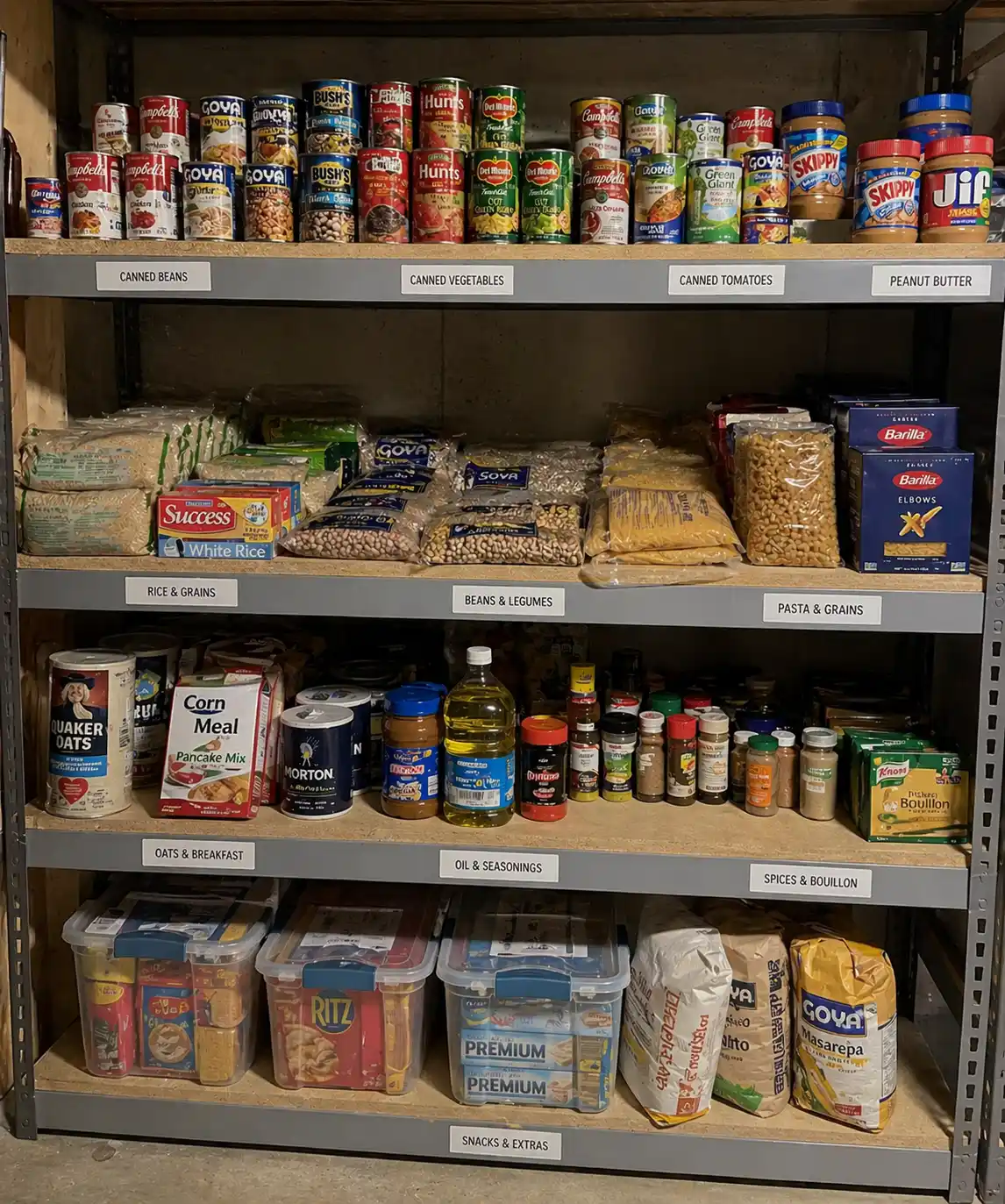
That week, I started building what I now call our emergency pantry. Not a bunker full of freeze-dried food packets. Not a doomsday prepper setup. Just a calm, practical, one-month supply of real food that sits on two shelves in our basement and gives me genuine peace of mind every single day.
The best part? I built the whole thing for under $50 — by shopping smart, buying in bulk, and choosing the right ingredients. Here's exactly how to do it.
What This Pantry Is (And What It Isn't)
Before we get into the shopping list, let's be clear about the goal here.
This is not extreme prepping. This is not preparing for the apocalypse or stocking a year's worth of food. This is the same common-sense preparedness that our grandparents practiced automatically — keeping a well-stocked pantry that could carry a family through a rough month without a single grocery store run.
This $50 pantry is designed to:
Provide a strict emergency survival baseline for one adult for a full month (around 1,300 calories a day) or feed a family of four comfortably for a week.
Require zero refrigeration — everything stores at room temperature
Use ingredients with long shelf lives (one to three years or more)
Double as a regular pantry rotation so nothing expires unused
Be built gradually if $50 upfront isn't possible — even $10 a week gets you there fast
This is frugal peace of mind. That's the entire point.
The Rules of the $50 Pantry
Before you buy a single thing, understand what makes an emergency pantry item worth including.
Rule 1: Calorie Density Matters
In a true emergency situation — or just a month where money is extremely tight — you need foods that deliver a lot of calories per dollar. Rice, beans, oats, and peanut butter are unbeatable on this metric. A pound of dry rice contains about 1,600 calories and costs around $0.70. That math is hard to beat anywhere.
Rule 2: Long Shelf Life Only
Everything in this pantry should last at least one year from purchase, preferably longer. This means dried goods, canned goods, and shelf-stable oils and condiments. Nothing with a two-week window has any business on these shelves.
Rule 3: Versatility Trumps Variety
Every item on this list should be able to serve multiple meals. Dried lentils, for example, become soup, tacos, rice bowls, or patties depending on the day. The more meals one ingredient can anchor, the harder it's working for your $50.
Rule 4: Buy What You'll Actually Eat
An emergency pantry full of things your family refuses to eat is not a pantry — it's expensive clutter. Every item on this list is something real people actually enjoy eating regularly. No obscure survival rations required.
The Master Shopping List With Costs
These prices are based on current Walmart and Aldi pricing. Costs may vary slightly by region, but these figures are realistic for 2026.
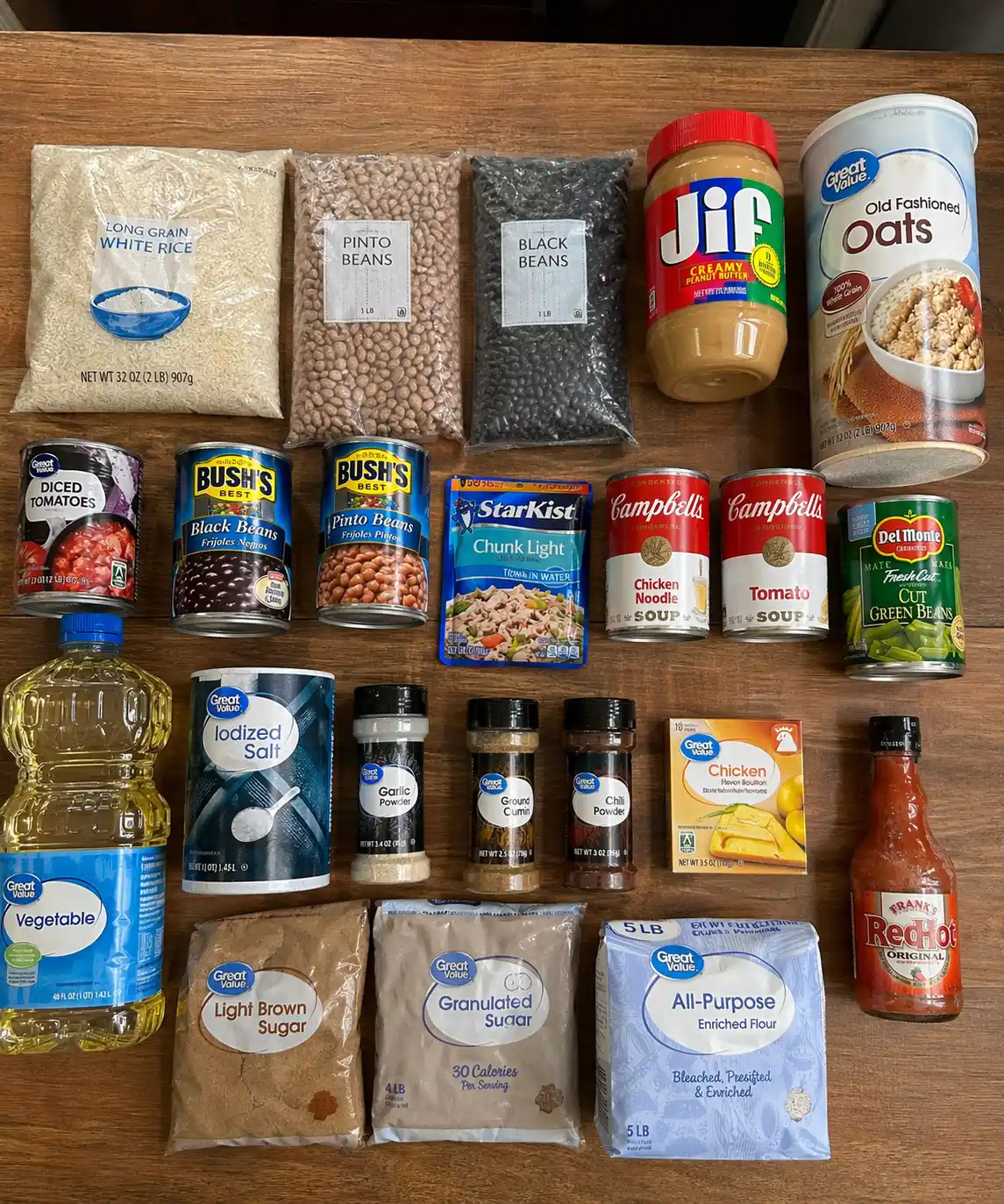
Grains and Starches — ~$15.00
10 lbs white rice (~$6.00) — The backbone of the entire pantry. Pairs with everything, lasts 2+ years sealed, and provides real caloric staying power.
2 lbs old-fashioned rolled oats (~$2.50) — Breakfast for weeks. Also works in baked goods and can thicken soups.
2 lbs dried pasta (~$2.00) — Quick-cooking, versatile, filling. Get spaghetti or penne — both work in multiple dish types.
1 box of saltine crackers (~$1.50) — Pairs with peanut butter, canned fish, or soup. Long shelf life, high satiety for the cost.
2 lbs cornmeal (~$2.00) — Makes cornbread, porridge, or simple flatbreads. Shelf life of 1–2 years.
1 lb all-purpose flour (~$1.00) — For simple flatbreads and thickening soups if nothing else.
Proteins — ~$18.00
4 lbs dried pinto or black beans (~$5.00) — One of the best protein and fiber sources per dollar in any grocery store. Shelf life of 2–3 years. Extremely versatile.
2 lbs dried red or green lentils (~$3.00) — Cook faster than beans (no soaking required), 18g of protein per cooked cup, and make incredible soups and curries.
4 cans of tuna (~$4.00 at ~$1.00 each) — High protein, shelf-stable for 3+ years, and adds real substance to pasta, crackers, or rice dishes.
2 jars of peanut butter (~$5.00) — Calorie-dense, protein-rich, requires zero cooking, and genuinely keeps hunger away. Kids eat it without complaint.
1 can of chickpeas (~$1.00) — Versatile enough to go into curries, stews, or smashed on crackers as a simple spread.
Canned Vegetables and Fruits — ~$8.00
4 cans diced tomatoes (~$3.60 at ~$0.90 each) — The base of soups, pasta sauces, and curries. Non-negotiable for a functional emergency pantry.
2 cans corn (~$1.40) — Adds sweetness, color, and nutrition to rice dishes and soups.
2 cans green beans (~$1.60) — A quick, nutritious side vegetable that needs no refrigeration.
1 can peaches or mixed fruit in juice (~$1.40) — A small morale win when everything else is savory. Don't underestimate this.
Fats, Flavoring, and Extras — ~$9.00
1 bottle vegetable oil (~$3.50) — Essential for cooking anything. Lasts 1+ year unopened.
Salt (~$0.80) — The single most important flavor tool in any kitchen.
Garlic powder, cumin, and chili powder (~$2.50 total if buying value-size) — These three spices alone can make dozens of distinct-tasting meals from the same basic ingredients.
Chicken or vegetable bouillon cubes (~$1.50) — Turns plain water into broth for soups and rice. Shelf life of 2 years. One of the most impactful cheap ingredients you can stock.
1 small bottle of hot sauce (~$1.00) — Optional but highly recommended for flavor variety when meals start to feel repetitive.
Total estimated cost: ~$50.00
Storage Tips: Making It Last
Building the pantry is half the job. Storing it properly is the other half.
Keep everything cool and dark. Heat and light are the enemies of shelf life. A basement shelf, a low kitchen cabinet, or a closet shelf works perfectly. Avoid storing near the stove or in a hot garage.
Use airtight containers for opened dry goods. Transfer rice, oats, and dried beans to sealed containers once opened. Large glass jars or basic food-safe plastic containers with tight lids extend shelf life significantly and keep pests out.
Label everything with the purchase date. A piece of masking tape and a marker on every item. When you rotate your pantry, you use oldest items first and replace them with new stock. This is called FIFO — First In, First Out — and it's how you never end up with expired pantry items.
Rotate, don't stockpile and forget. Your emergency pantry shouldn't be a separate sealed vault that never gets touched. Cook from it regularly, replace what you use, and it stays fresh. This also means you're already eating the foods when an emergency hits — not trying to figure out how to cook dried lentils for the first time under stress.
Meals You Can Make From This Exact Pantry
Here's the proof that this isn't survival food — it's real, good food.
Simple Rice and Beans
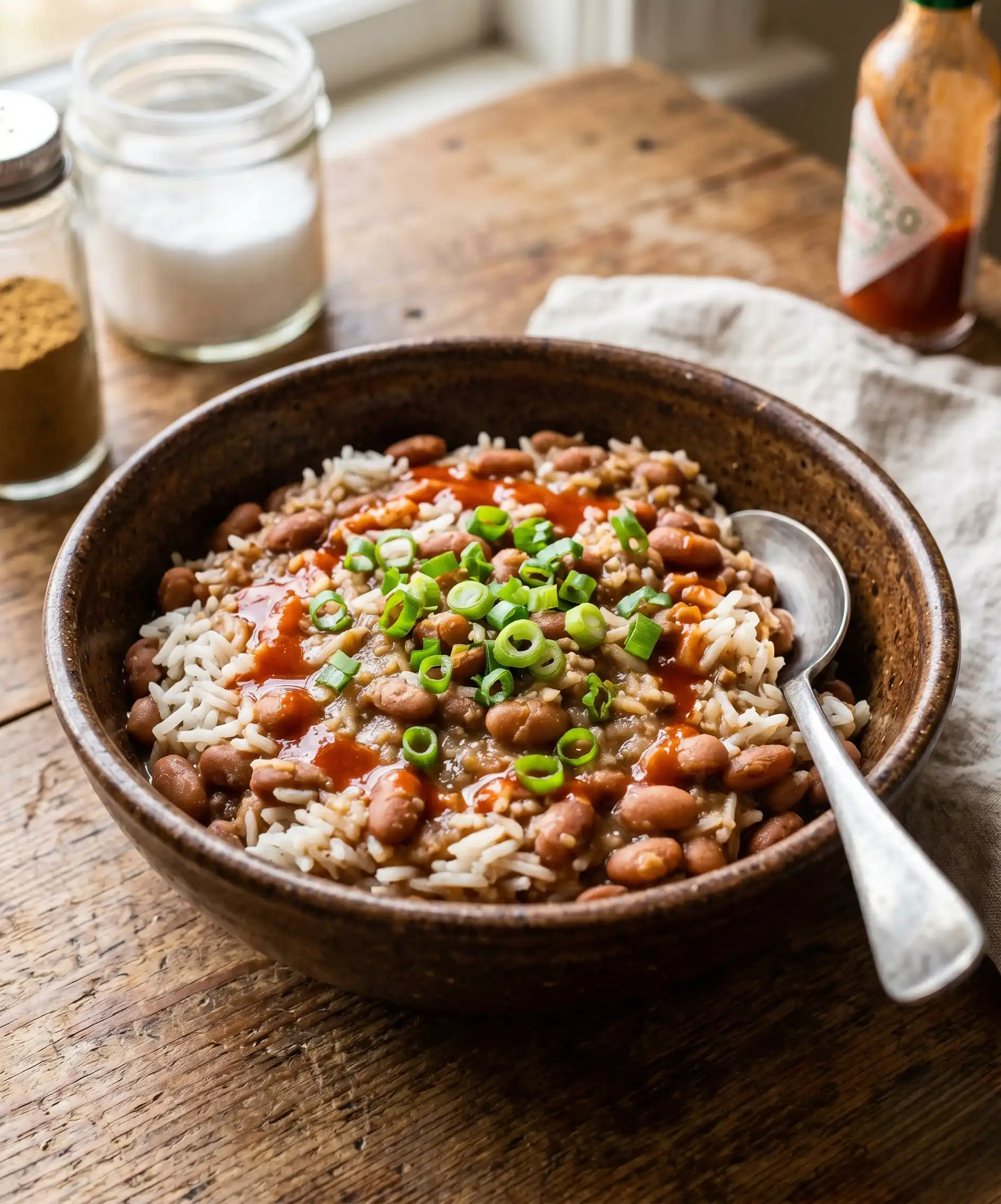
Cook white rice, simmer pinto beans seasoned with salt, cumin, and garlic powder. A bowl of rice and beans with hot sauce is genuinely satisfying and deeply nutritious. Calories per serving: ~500. Cost per serving: ~$0.40.
Red Lentil Soup
Simmer red lentils with diced canned tomatoes, bouillon, garlic powder, and cumin until thick and creamy. Serve over rice or with crackers. Ready in 25 minutes, no soaking required, and it tastes remarkable for how little it costs.
Peanut Butter Oatmeal
Cook oats with water, stir in a spoonful of peanut butter, and add a pinch of salt. High protein, high calorie, filling for hours. This is a legitimate breakfast that costs about $0.25.
Tuna Pasta
Cook pasta, drain, toss with canned tuna, a drizzle of oil, salt, garlic powder, and whatever canned vegetables you have. Ten minutes, one pot, and it actually tastes good.
Lentil Tacos
Season cooked lentils with chili powder, cumin, and garlic powder until they have the same bold flavor as seasoned ground meat. Serve with crackers if you don't have tortillas, or just eat as a rice bowl with canned corn and hot sauce. My family genuinely loves this one.
Building It Gradually If $50 Feels Like Too Much
Not everyone has $50 to spend in a single grocery trip. That's completely okay — and it doesn't change the end goal.
A 5-week build plan:
Week 1 ($10): 10 lbs rice + 2 lbs dried beans
Week 2 ($10): 2 jars peanut butter + 2 lbs oats
Week 3 ($10): 4 cans diced tomatoes + 4 cans tuna + 1 lb lentils
Week 4 ($10): Vegetable oil + bouillon + salt + spices + 2 lbs pasta
Week 5 ($10): Remaining canned goods + crackers + cornmeal + extras
Five weeks, $10 at a time, and you have the same complete pantry. The goal isn't perfection overnight. The goal is getting there.
The Peace of Mind Is Worth Every Dollar
I want to be honest about something. Since building our emergency pantry, I've never actually needed to live off it for a full month. And I hope I never do.
But knowing it's there — two shelves of real food that could carry my family through a genuinely hard stretch — has changed how I feel about everyday financial uncertainty in a way that's hard to fully explain. It's a small but real form of security. A quiet buffer between my family and the worst-case scenario of an empty refrigerator and an empty bank account at the same time.
Fifty dollars. A few hours of shopping and organizing. Years of peace of mind.
That math makes sense to me every single time.
Now I want to hear from you — what's the one pantry staple you consider absolutely non-negotiable? The item you always make sure you have on hand no matter what? Drop it in the comments — I'm always looking to add to this list, and your answer might be exactly what someone else needed to hear!
Found this helpful? Save it to your Frugal Living or Emergency Prep board on Pinterest — and share it with a friend who's been meaning to stock their pantry but hasn't known where to start.

Reader Interactions